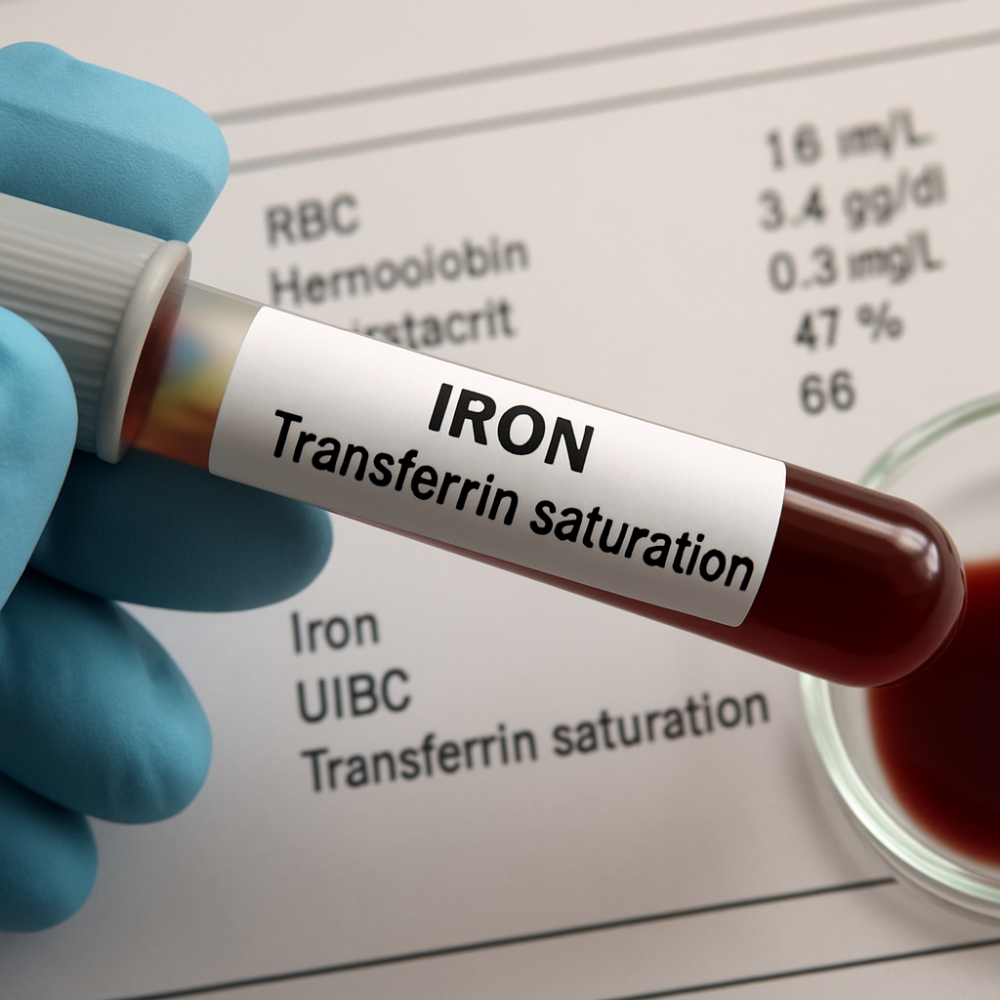
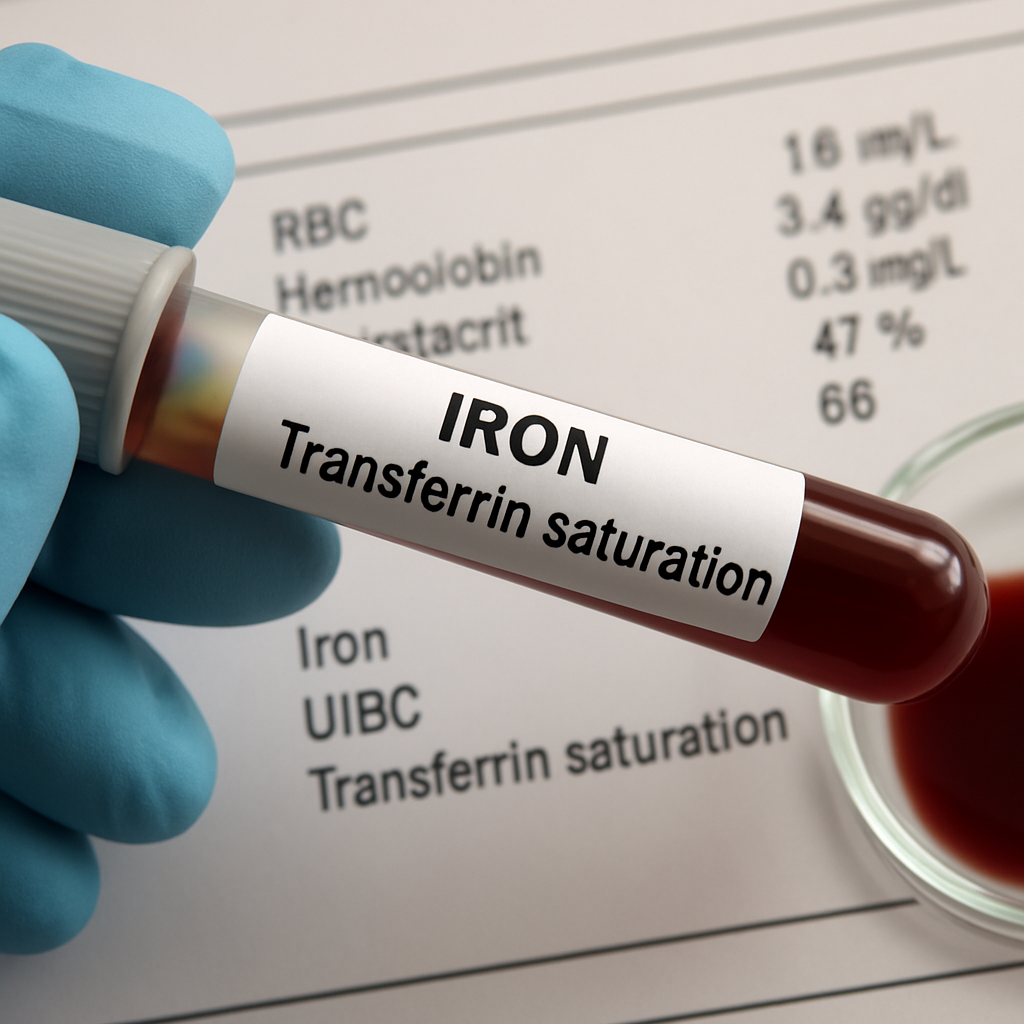
Iron saturation and transferrin saturation are terms often used interchangeably when assessing iron status, but they refer to the same calculation: the proportion of transferrin, the blood protein that binds and transports iron, that is actually loaded with iron. The standard measure, transferrin saturation (TSAT), is a critical indicator used to interpret iron deficiency or iron overload in clinical practice. Knowing the difference between normal and abnormal iron saturation levels is essential for evaluating symptoms, low levels in women, and interpreting lab results to guide treatment and management.
Transferrin Saturation vs Iron Saturation: What Do They Measure?
Transferrin saturation (TSAT) represents the percentage of transferrin molecules in the blood that are bound by iron. This is calculated by dividing serum iron by total iron-binding capacity (TIBC) and then multiplying by 100 to get a percentage. In practical terms, iron saturation and transferrin saturation refer to the same concept and measurement in medical diagnostics.
Both terms are used to help reveal whether someone might have an iron deficiency—where the body does not have enough iron to meet its needs—or iron overload, which can damage organs. TSAT integrates with other tests, such as serum iron and ferritin, for a comprehensive interpretation of iron status in blood.
Understanding this equivalence is key when evaluating test results. If your lab mentions iron saturation or transferrin saturation, they are talking about the same calculation and clinical indicator.
Normal Iron Saturation Levels and Interpretation: What is Considered Optimal?
Iron saturation levels between 20% and 50% are generally considered normal for most adults, though there can be minor variation based on factors such as age, sex, and laboratory reference ranges. Transferrin saturations below 20% signal likely iron deficiency, while saturations above 50% suggest iron overload conditions such as hemochromatosis or excessive supplementation [source].
Women, especially during reproductive years, may have lower iron and transferrin saturation levels due to menstrual losses or pregnancy. Optimal levels in women generally remain within the same range; however, values below 16-18% often prompt further investigation for iron deficiency, especially if symptoms such as fatigue or hair loss are present.
Routine blood work may also reveal isolated abnormal TSAT values; understanding the significance in relation to TIBC, ferritin, and hemoglobin can help determine causes and appropriate treatment for both high and low iron saturation. Test interpretation should always consider the physiological context and patient history.
Common Causes of Low and High Transferrin Saturation
Low transferrin saturation (below 20%) is most commonly seen in cases of iron deficiency anemia, chronic blood loss, increased iron requirements (such as during pregnancy or perimenopause), or insufficient dietary iron intake. In females, menstrual blood loss or postpartum states are frequent causes of low iron saturation.
High transferrin saturations (greater than 50%) typically occur with iron overload conditions—hereditary hemochromatosis being a primary example—or excessive iron supplementation. Elevated TSAT can also be observed with certain liver disorders or excessive destruction of red blood cells.
Other factors can cause TSAT to fluctuate, including fasting, acute illness, and variations in plasma iron-binding capacity. It is important to interpret these measurements alongside ferritin and total iron-binding capacity for a full clinical picture.
Understanding these causes allows for targeted treatment—such as iron supplementation for low levels, or strategies to reduce iron intake and absorption for those with high saturation.
Symptoms Associated with Abnormal Iron Saturation Levels
Symptoms of low transferrin/iron saturation often reflect insufficient oxygen transport and include:
- Fatigue and weakness
- Pale skin
- Shortness of breath
- Restless legs or tingling sensations
- Hair loss, especially in females
High iron saturation, on the other hand, may not initially present with symptoms but can eventually cause:
- Joint pain
- Liver dysfunction
- Darkened skin
- Heart problems or diabetes (long-term complications)
Recognizing symptoms in the context of laboratory results can lead to earlier diagnosis and proper intervention. The clinical significance can be heightened in special populations such as pregnant women or those with pre-existing conditions.
How to Treat and Manage Abnormal Iron Saturation, Including Calculating and Monitoring Levels
Treatment for low iron saturation generally includes increasing dietary iron, oral supplementation, or in more severe cases, intravenous iron. For women, special consideration is given to pregnancy, perimenopause, and postpartum periods, when requirements change.
Reducing high iron saturation involves limiting iron intake, avoiding unnecessary supplementation, and in cases of hereditary iron overload, regular phlebotomy or medication. Additional strategies may include monitoring plasma ferritin and total iron-binding capacity to ensure safe, sustained reductions.
It’s critical to recalculate TSAT periodically using updated laboratory data: divide the serum iron by the TIBC and multiply by 100. This helps track progress and detect new abnormalities. More information on calculation and direct measurement of plasma iron and transferrin can be found in this authoritative source.
When in doubt, consult your healthcare provider to interpret your unique levels and symptoms, especially if you are female, pregnant, or have a medical condition that may affect iron metabolism.
In summary, iron saturation and transferrin saturation describe the same laboratory marker, and monitoring their levels—especially in women or those with chronic symptoms—can guide both interpretation and targeted treatment strategies.