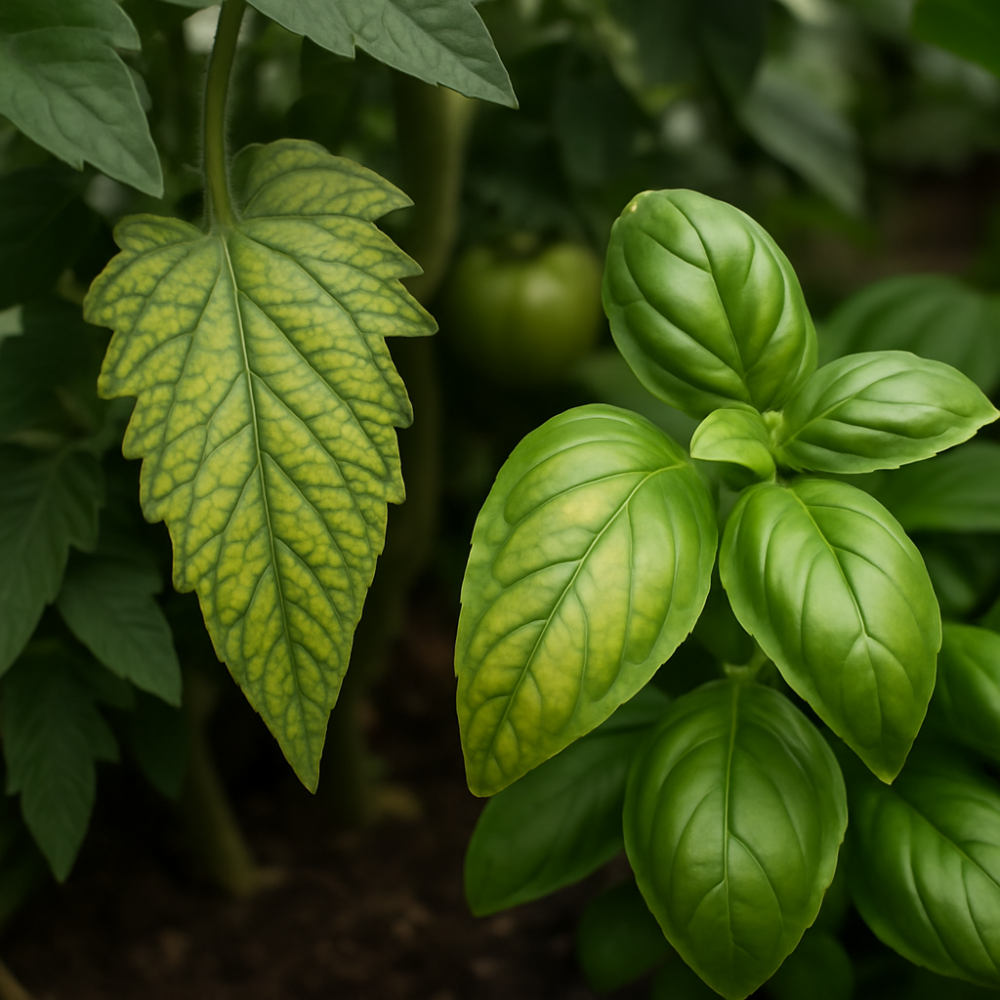
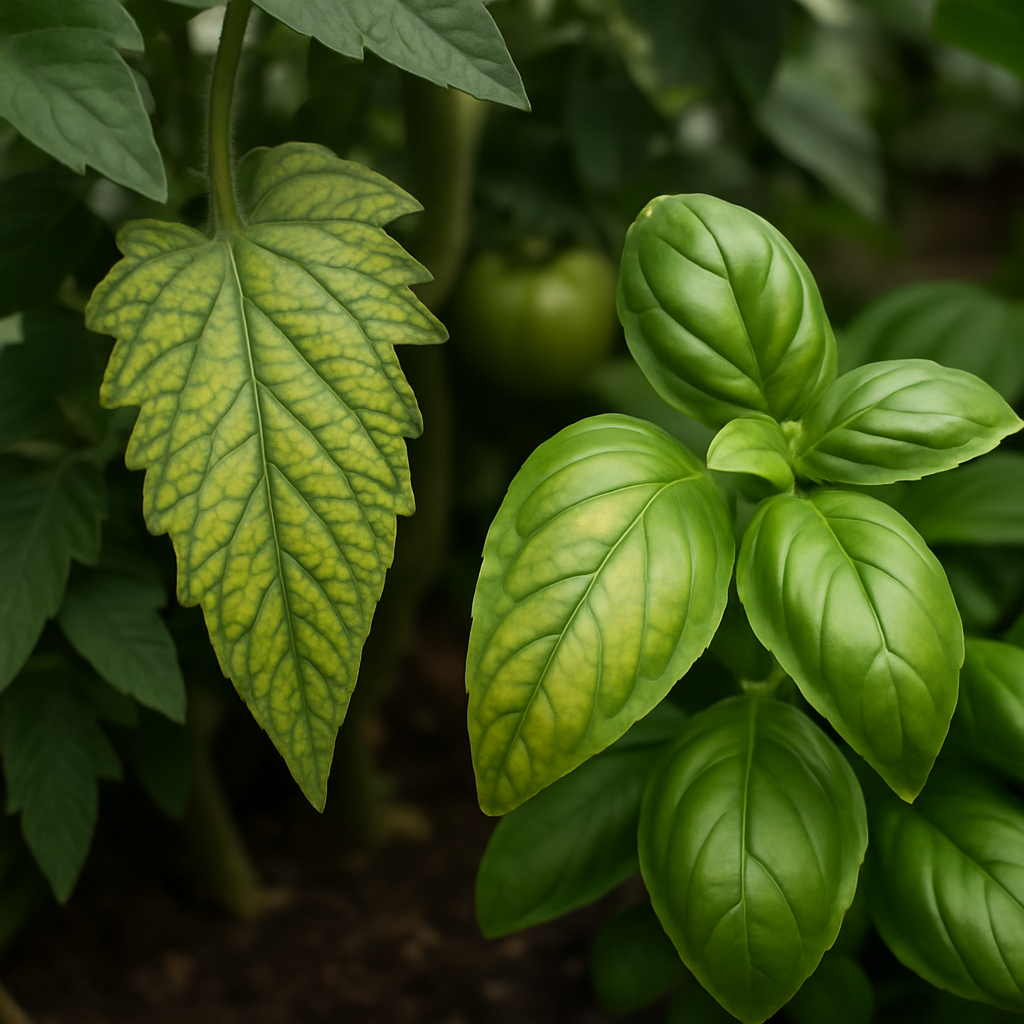
Interveinal chlorosis in plants like tomatoes and basil is often the first visible sign of a magnesium deficiency. This condition is characterized by yellowing between the leaf veins while the main veins themselves remain green. Magnesium is essential for chlorophyll production and plant metabolism, so its deficiency can quickly impact plant vigor and yield. Rapidly addressing these symptoms can prevent further complications, reduced fruit set, and long-term plant stress.
Recognizing Yellowing Symptoms in Tomato and Basil
The hallmark of interveinal chlorosis is a striking yellowing pattern seen on older, lower leaves. In tomatoes, leaves show yellow tissue bordered by distinctly green veins. In basil, this often presents as pale patches between the leaf veins, sometimes progressing to necrotic spots if left unmanaged. This is because both crops rely heavily on magnesium for healthy photosynthetic processes.
The progression of symptoms can be subtle at first — slight interveinal paling — but may advance to broader yellow areas and, with continued deficiency, brown spots and eventual leaf drop. Presence of interveinal chlorosis on older leaves is a key diagnostic clue, as magnesium is a mobile mineral in plants and is reallocated to younger tissue during periods of shortage (Bluelab).
Promptly identifying these early warning signs helps caregivers avoid irreversible loss of leaf function, especially during times of rapid fruit or leaf production where nutrient demand spikes.
Besides visual cues, growers should look for coinciding signs such as poor fruit set, slow growth, or stunted plants — all of which may accompany persistent magnesium deficiency and associated chlorosis (University of Kentucky).
Soil Mineral Balance and Magnesium Uptake
Magnesium is a vital mineral for plant physiological processes, including photosynthesis and enzyme activation. When soil pH drops below 6.0, magnesium becomes less available, even if it is present in abundant quantities. Acidic conditions can trap magnesium in forms inaccessible to roots, explaining why plants growing in such soils are more prone to interveinal chlorosis and leaf symptoms.
Soil enriched excessively with potassium can also interfere with magnesium uptake. This nutritional antagonism means that increasing one mineral (potassium from fertilizer, for example) can cause a functional magnesium deficiency, even if soil tests indicate moderate magnesium presence. Balancing soil nutrients is for this reason an important long-term management step.
Plants such as basil and tomatoes thrive best when soil pH and mineral ratios are carefully monitored. Regular soil testing for magnesium, potassium, and calcium can forewarn growers of potential imbalances that may eventually lead to foliar yellowing and stress symptoms.
Low magnesium and poor pH are not the only risk factors for deficiency; irrigation quality, organic matter levels, and competition with other cations also play roles in leaf mineral profiles.
Diagnosis Steps and Differential Conditions
While interveinal chlorosis strongly suggests magnesium deficiency, it is important to differentiate it from other causes of leaf yellowing. Nitrogen, iron, or manganese shortages can also result in chlorosis, though their symptoms vary in distribution and severity:
- Nitrogen deficiency: Typically leads to uniform yellowing, not restricted to the interveinal areas, and affects older leaves first.
- Iron deficiency: Often appears on new growth, with the entire leaf turning pale except the veins.
- Manganese and zinc: May cause mottled yellowing with necrotic spots, but magnesium’s signature is the clear interveinal pattern on mature foliage.
In tomatoes, close attention to leaf patterning and progression of symptoms can help confirm the diagnosis. For basil and certain ornamentals, laboratory leaf tissue analysis provides definitive validation of low magnesium status, ruling out overlapping deficiencies present in the garden or greenhouse environment.
Plant responses to correction efforts — such as rapid greening after magnesium supplementation — also support a correct diagnosis. Observing recovery patterns aids growers in fine-tuning future nutritional strategies.
Correcting Magnesium Deficiency During Fruit Set and Growth Stages
The period during which tomatoes and basil experience heavy fruit set or robust vegetative expansion is when magnesium demands are highest. If deficiency symptoms develop, foliar feeding with magnesium sulfate (Epsom salts) or appropriate soil amendments can yield rapid improvement. Dissolving Epsom salts in water and applying it directly to foliage provides a fast, temporary rescue.
For more permanent correction, amending soils with dolomitic lime (if pH is also low) or a balanced granular magnesium fertilizer replenishes root-zone stores. Achieving and maintaining soil pH in the ideal range (generally 6.2–6.8 for these crops) also boosts magnesium availability and curbs recurrence of symptoms (Vegetable Scout UKY).
Cultural practices to reduce competition from potassium and optimize irrigation can further enhance mineral absorption. Regularly rotating crops, integrating organic matter, and monitoring leaf tissue mineral content keep magnesium levels balanced over the long term.
Special care should also be given in container-grown and hydroponic systems, as leaching and rapid mineral depletion can cause deficiency to manifest abruptly with visible yellowing between leaf veins.
Prevention in Basil and Other Susceptible Crops
Basil, alongside crops like tomatoes, peppers, and raspberry, is susceptible to magnesium shortages when grown in depleted or overly acid soils. Preventive strategies include periodic soil testing, using fertilizers with balanced ratios of potassium, calcium, and magnesium, and adjusting cultural practices to sustain strong mineral profiles.
Applying dolomitic lime during initial bed preparation not only elevates soil pH to the desired range, but also ensures a slow-release supply of both calcium and magnesium — a benefit for basil and similar herbs. For those growing basil in containers, using high-quality, pH-balanced potting mixes minimizes risk of abrupt magnesium depletion.
Attention to watering practices is essential, as irregular moisture and excessive leaching can quickly reduce the reservoir of soluble magnesium, particularly in sandy or light soils. Amendments such as compost and mulch support moisture retention and continuous mineral cycling within the upper root zone.
Finally, choosing disease-resistant varieties and rotating crops seasonally reduces chronic plant stress that might otherwise exacerbate symptoms in already mineral-deficient soils.
Understanding and addressing interveinal chlorosis and magnesium deficiency promotes vigorous growth and optimal yields in tomatoes, basil, and related crops throughout their productive cycles.