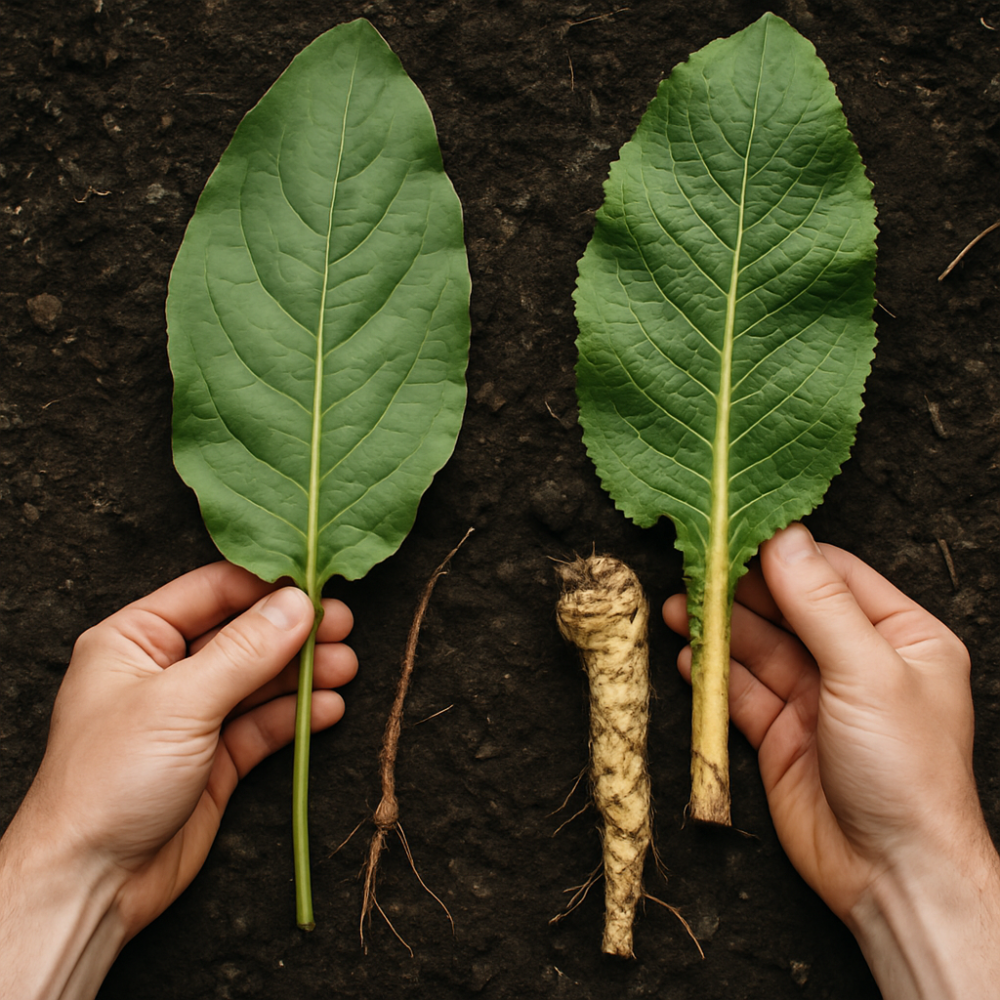
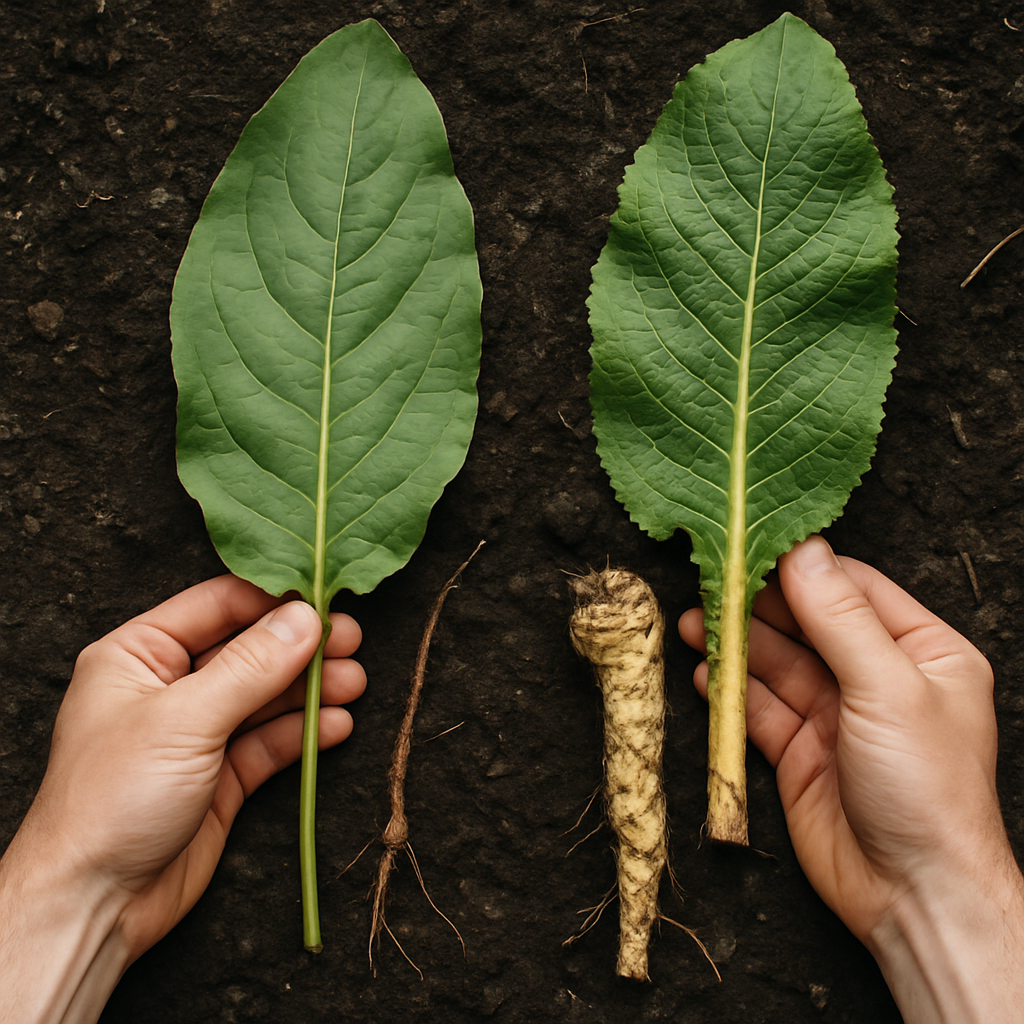
If you are trying to identify plants growing in places like Norfolk, Virginia, distinguishing between dock leaves and horseradish can be surprisingly challenging. The quickest way to tell the difference is by examining the leaf shape and stem texture: dock leaves are generally more oval and have ridges on their stems, while horseradish leaves are elongated with a rounded, smooth stem. To confidently recognize each, it is important to look at a few specific features, from leaf edges to root structure.
Leaf Shape and Texture: Key Visual Features
One of the most telling differences between dock leaves and horseradish is the leaf shape. Dock leaves tend to be broader, more oval, and sometimes feature a slightly wavy edge. Their stems, or petioles, frequently have a ridged texture that can be felt when you run your fingers along them [source]. This gives dock a distinct tactile quality, which is particularly useful for quick identification in the field.
By contrast, horseradish leaves are typically elongated, shiny, and have a smoother, more cylindrical stem. The leaf itself tends to be less oval, instead narrowing toward the base and tip. Searching for these qualities is an effective first step in the identification process when comparing dock leaves vs horseradish.
In addition to these physical features, horseradish frequently shows a more upright growth habit, while dock often spreads low and wide. Observing the arrangement of several plants together can further confirm what species is present.
Serrated Edge and Botanical Comparison
The leaf edge—sometimes called the margin—is another useful clue. Horseradish leaves often sport a very obvious toothed or serrated edge, making them easy to distinguish from the more subtle or even smooth-edged dock leaves in similar habitats [reference]. While both may appear similar at a glance, the detail of serration or the lack thereof often makes the distinction clear.
Botanically, the two plants are quite different. Dock belongs to the Rumex genus, while horseradish is classified as Armoracia rusticana. Despite both sometimes being confused with other plants such as minima small weed or even ginkgo in their broad naturalistic setting, their root and leaf characteristics keep them easily separable when inspected closely. These differences are helpful for anyone trying to identify unfamiliar plants among other garden species like carolina saw palmetto or creeping cinquefoil.
Dock’s matt foliage also contrasts with the shiny appearance of horseradish leaves, adding another tactile and visual cue when handling specimens. Knowing these differences will make you less likely to confuse either species with unrelated types such as sunburned hibiscus or fresh magnolia.
Finally, docking your observations with an online reference or field guide can cement your identification skills, especially if you are still unsure after your initial examination.
Root Identification and Common Lookalikes
Beyond leaves, root structure is a highly reliable identifier. Horseradish is prized for its thick, pungent, white root, which, when snapped, releases an unmistakable sharp odor. Dock roots are often thinner, fibrous, and lack the spicy aroma found in horseradish. This method is particularly useful when above-ground features are less distinct, for example after browning or plant curling.
Digging up a sample and checking root color, size, and smell is one of the strongest differentiators if you are still unsure. However, exercise caution—other species like johnson grass may have similar underground structures but are unrelated. Knowing the botanical name of horseradish (Armoracia rusticana) or dock (Rumex spp.) can support your foraging or identification work.
Plants like prickly dandelion or even philodendron may appear in the same habitat but do not share the root characteristics or leaf forms of either dock or horseradish.
Habitat and Natural Range Insights
Both dock leaves and horseradish can be found in disturbed soils, edges of fields, or alongside rivers and wetlands. Horseradish occasionally naturalizes far from its original garden planting, while dock is famous for thriving in compacted earth and roadside locations—a tough spot sometimes shared with sandbar willow or buttonwood. If you see broad-leaved plants in shaded areas or places known for a rich diversity such as Mediterranean bay or desert ash, pay careful attention to the details described above.
Examining the microhabitat can limit confusion with ornamental species like monstera, pothos, or bamboo metal ivy and point you toward a positive identification. Geography may give extra hints: dock and horseradish are both well-established in much of North America, including Virginia and even as far as California and Texas. Remember that garden escapes or accidental introductions are possible, leading to either plant showing up in artificial or unexpected environments.
During times of extreme weather, such as browning or sunburn, both species may be harder to distinguish due to leaf damage or loss. Pay extra attention to root and stem characteristics if this is the case.
Finally, always compare multiple leaf and root samples to reduce the chance of confusion with unusual local flora such as philippine teak or durban poison, neither of which should resemble dock or horseradish on closer inspection.
Quick Reference Table and Practical Foraging Tips
- Dock Leaves: Oval, matt, ridged petiole, often broad and spreading. Commonly grows in disturbed or compacted sites.
- Horseradish: Elongated, shiny leaves, rounded smooth stems, upright habit, thick white root with strong odor.
- Other Clues: Serrated edges point to horseradish; subtle or wavy edges suggest dock. Smell when snapped, as horseradish releases a sharp aroma.
- Be Cautious: Some weeds and ornamental plants mimic the look, but careful inspection of root, leaf, and growth habit will lead to accurate identification.
- Check Authoritative Sources: For more visual aids and field reports, rely on resources like this active field guide (community discussion) and foraging references (field observation) for further confirmation.
Whether you are a gardener, forager, or casual plant enthusiast in areas ranging from Texas to Virginia, using these leaf, stem, and root characteristics will help ensure you correctly identify dock and horseradish in any setting.